
Land-based ecosystems are fundamental pillars of our wellbeing. However, their resilience is increasingly threatened by the growing demand for food, housing, energy and other ecosystem services. Building on the Voluntary Guidelines on the Responsible Governance of Tenure of Land, Fisheries and Forests in the context of Food Security as an overarching framework, we work to promote the rights of all land users as an important precondition for sustainable and inclusive development.
Our work involves analyzing structural barriers that hinder land users from enjoying their legitimate rights. Together with our partners, we explore context-specific solutions and innovations to overcome these barriers. This includes supporting governments in providing the necessary services to their citizens, and supporting right holders in claiming their legitimate rights. Building on the insights gained, we support the development of monitoring tools to increase transparency and accountability within the land sector, and to track the implementation of national and international commitments. Our approach can be described as multi-level changemaking to democratize food systems, end chronic poverty and food insecurity and restoring ecosystems.
We work simultaneously across the following three levels:
- Local level: We create space and strengthen community-based organizations and sub-national governance institutions to co-develop social innovations for land tenure security.
- National level: We work with governments, human rights institutions, and civil society networks to support the implementation of progressive national policies, also by building on progress made in global policy processes.
- Global level: Through our broad research and policy networks we actively engage in identifying policy spaces and agenda setting to ensure that these ideas can be taken up and integrated into formal decision making and implementation. A core focus of our work is the integration of land tenure in the implementation of the three Rio Conventions.
.png)
Land Tenure, Governance, and Resilience at COP17
TMG Research on COP17: closing the governance gap in land tenure, women's land rights, and the Future Strategic Framework. Ulaanbaatar, August 2026.

Carbon Markets and Community Land Rights
Project developers and buyers of carbon credits from Voluntary Carbon Markets cannot directly resolve land governance challenges in host countries, but they play a critical role in shaping how projects are implemented, and in strengthening governance frameworks for carbon projects. By demanding transparency and credible safeguards, project developers and credit buyers can provide crucial guidance on specific project practices that should be enhanced to improve overall governance and implementation of carbon projects.
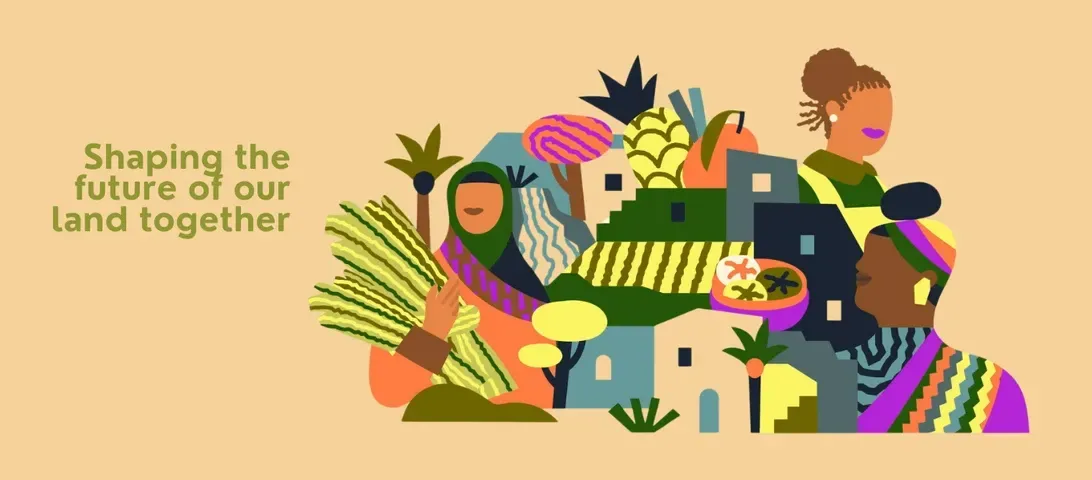
The Women’s Land Rights Initiative
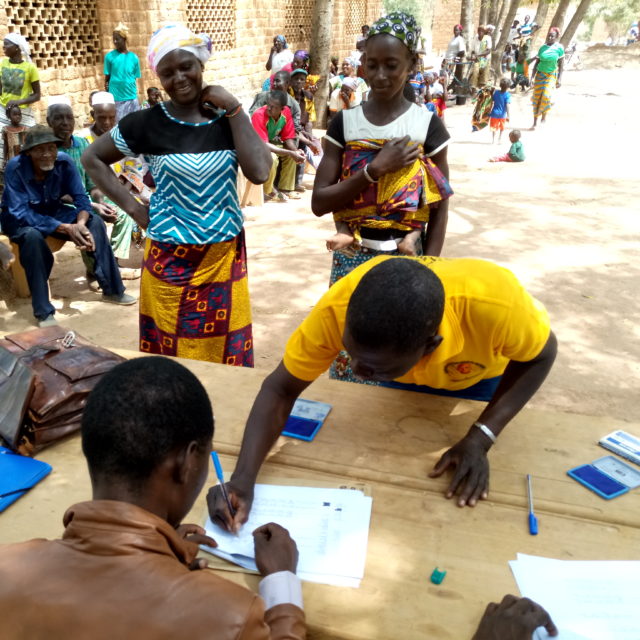
Women's land rights hold the potential to drive transformative change across the Rio Conventions to address the climate crisis, biodiversity loss and land degradation. With over 60 partners, we're ensuring women take center stage of just climate action.
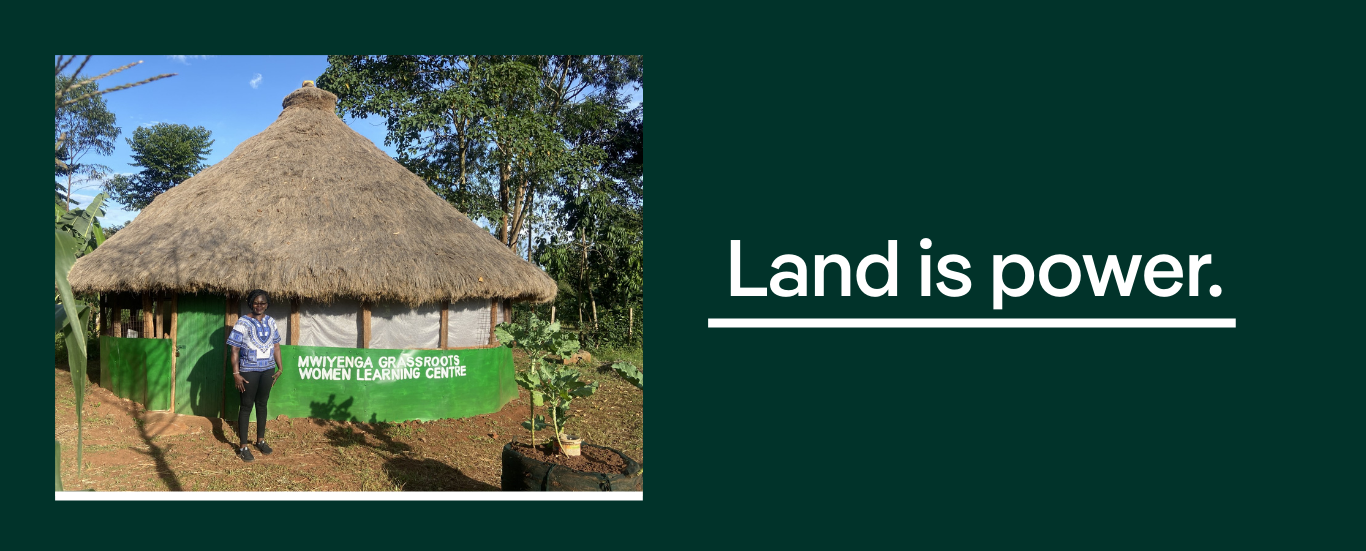
Land is power. And the roots of change are grounded in community action.
When women are locked out of land access, they’re locked out of opportunity. We work with grassroots organizations to develop solutions that rebalance this power - transforming land access into a catalyst for equity, security, and lasting change.

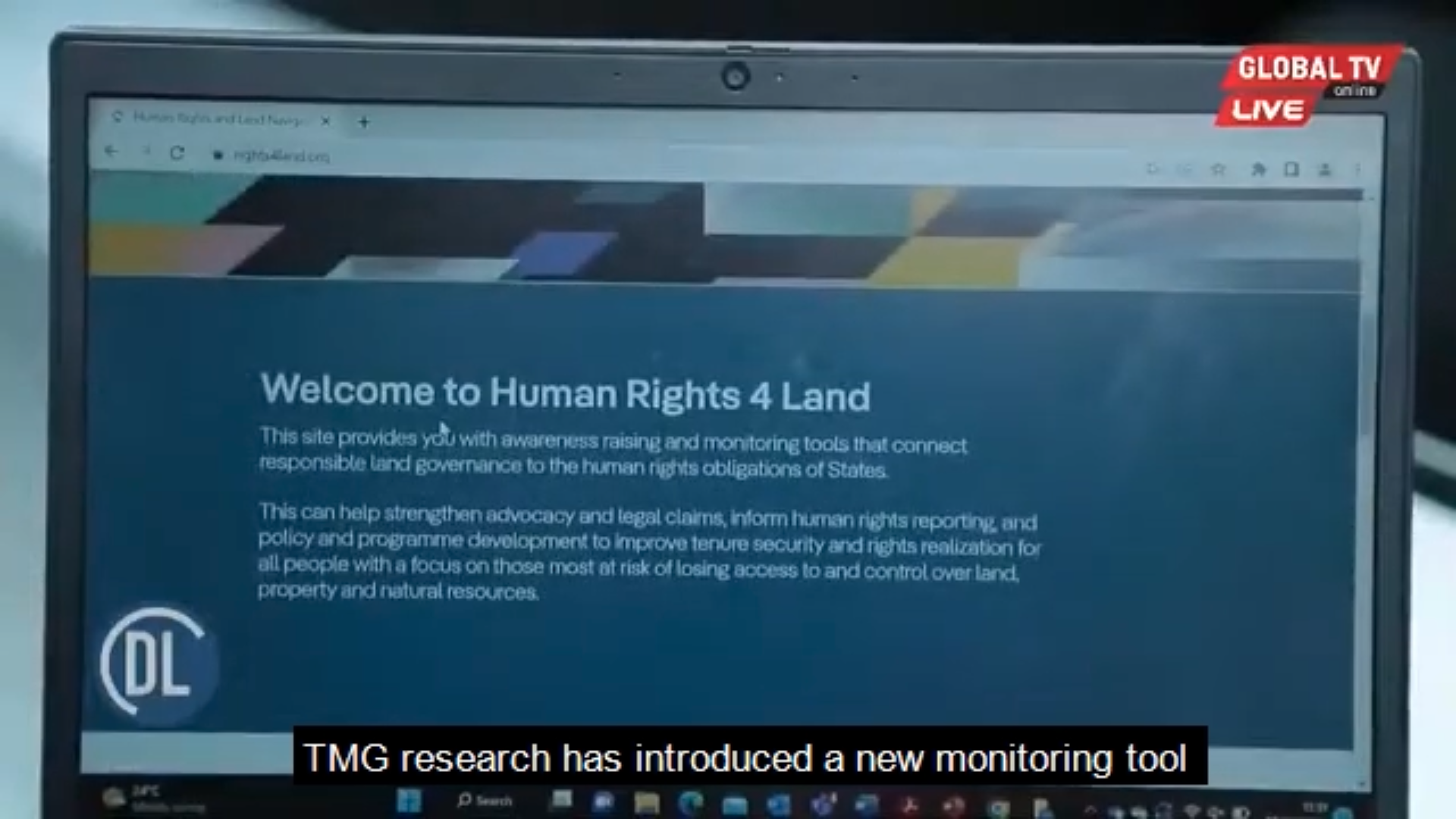
Human Rights and Land Navigator
A powerful tool that reveals the full extent of land and human rights violations key for advocates, land defenders, and governments to ensure rights are respected, protected and fulfilled
Land, Gender and Human Rights

Improving rights-based land governance with innovative tools
It is broadly acknowledged that the lack of land tenure security is a key barrier, not only to improved food security and sustainable land management practices at the farm level, but also for the restoration of ecosystems and resilience to climate change. While most countries have legal frameworks in place to recognize claims to land, both at individual and community level, enforcement remains weak. Despite their significant contribution to food security, and farm-based livelihoods, women are particularly disadvantaged due to the dominance of patriarchy and other unequal socio-cultural values in determining the ownership of land and other productive resources.
Projects
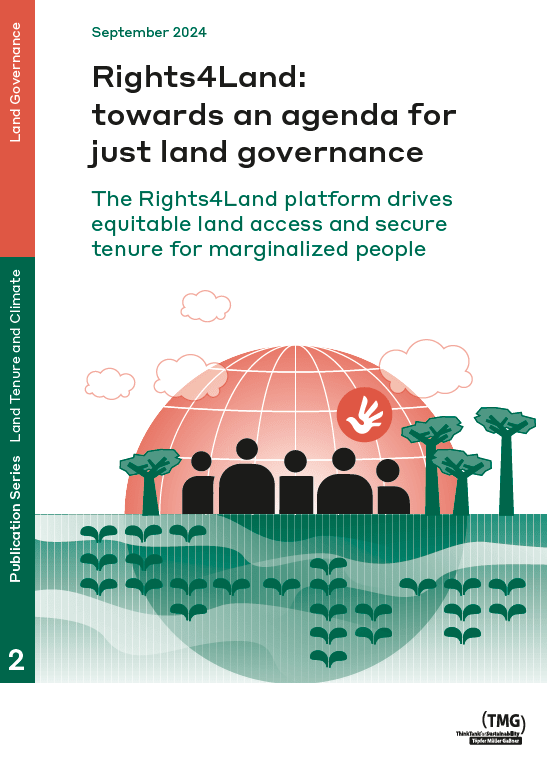
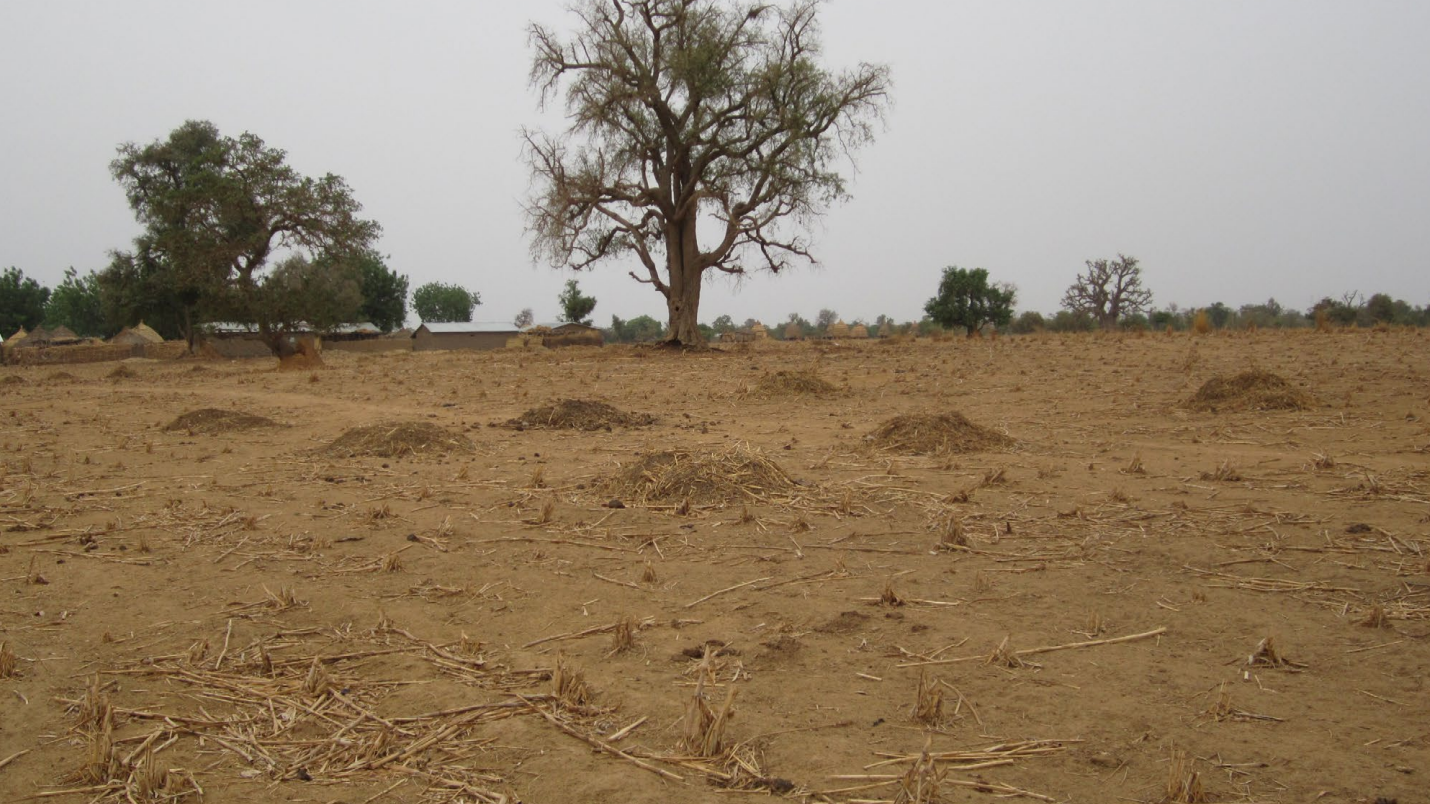
Multi-level changemaking: Our approach to strengthening responsible land governance
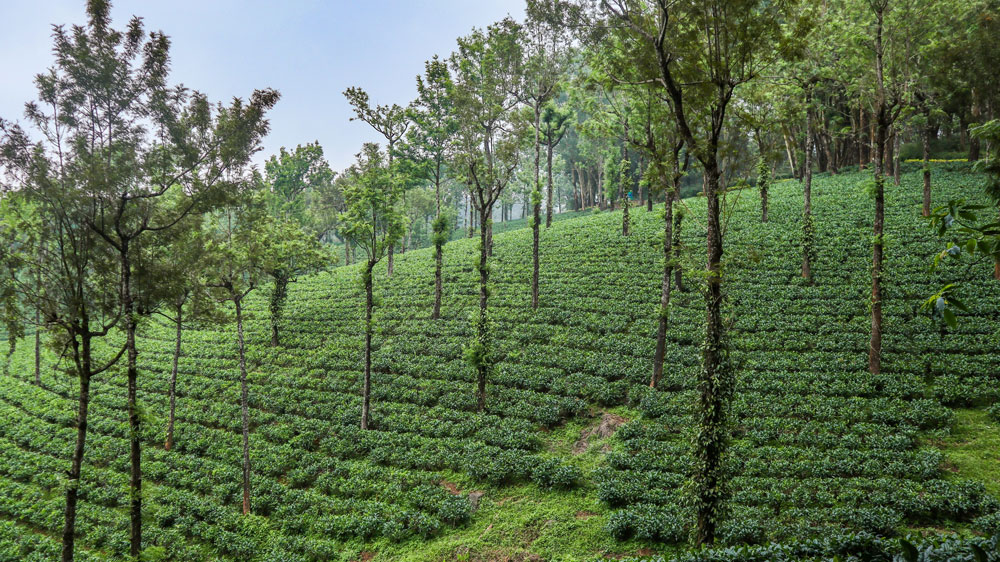
Bringing together diverse actors to strengthen policies and actions on responsible land governance
This body of work builds on TMG's flagship Global Soil Week programme, which aims to enable the protection of legitimate land tenure rights in the context of land degradation neutrality (LDN) measures and enabling smallholder farmers and local communities to contribute to the implementation of the UN Convention for Combating Desertification.[DB1] A key objective of the work is to mobilize partnerships to translate global policy frameworks and targets into feasible actions at the local level and leverage action research to improve global governance agendas.

Sustainable Land Management
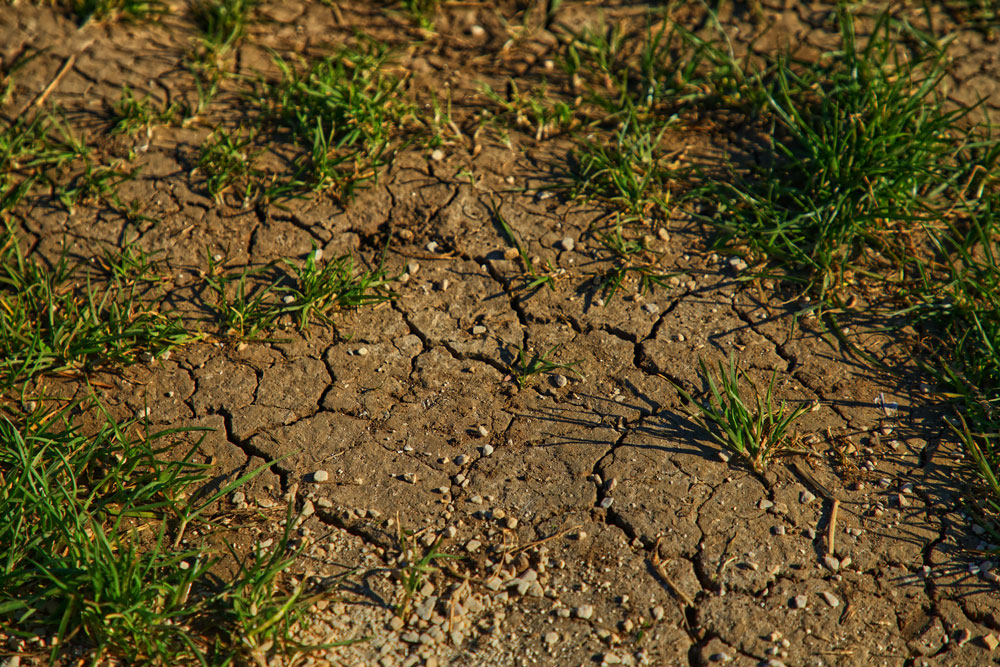
Exploring social innovations at community level to foster sustainable land management practices
This thematic strand focuses on understanding the underlying socio-political dynamics and other structural challenges that smallholder farmers face in investing in sustainable land management practices. Based on locally-embedded research with our partners in several African countries, we develop, and pilot, "social innovations" to overcome structural obstacles. By sharing the insights gained with our broader networks of partners, as well as at various multilateral processes, we also seek to contribute to a systemic understanding of the enabling conditions for scaling up sustainable land management, at both the local and ecosystem levels.
Sustainable Soil Management

Creating enabling environments for sustainable soil and land management practices
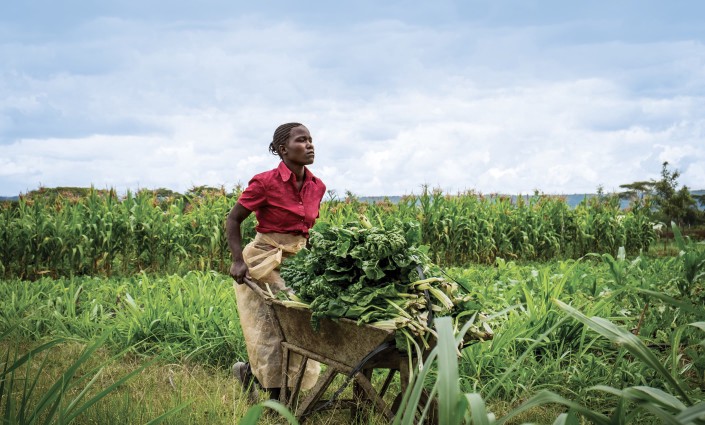
Healthy soils are a prerequisite for sustainable food production, carbon storage and the provision of clean drinking water. Under this theme we focus on some of the underlying socio-political dynamics and other structural challenges that limit smallholder farmers from investing in soil restoration and protection. Based on locally embedded research with our partners in several African countries, we develop, and pilot, "social innovations" to overcome the identified structural obstacles. We also explore the enabling conditions for scaling up sustainable land management, at local and ecosystem levels.
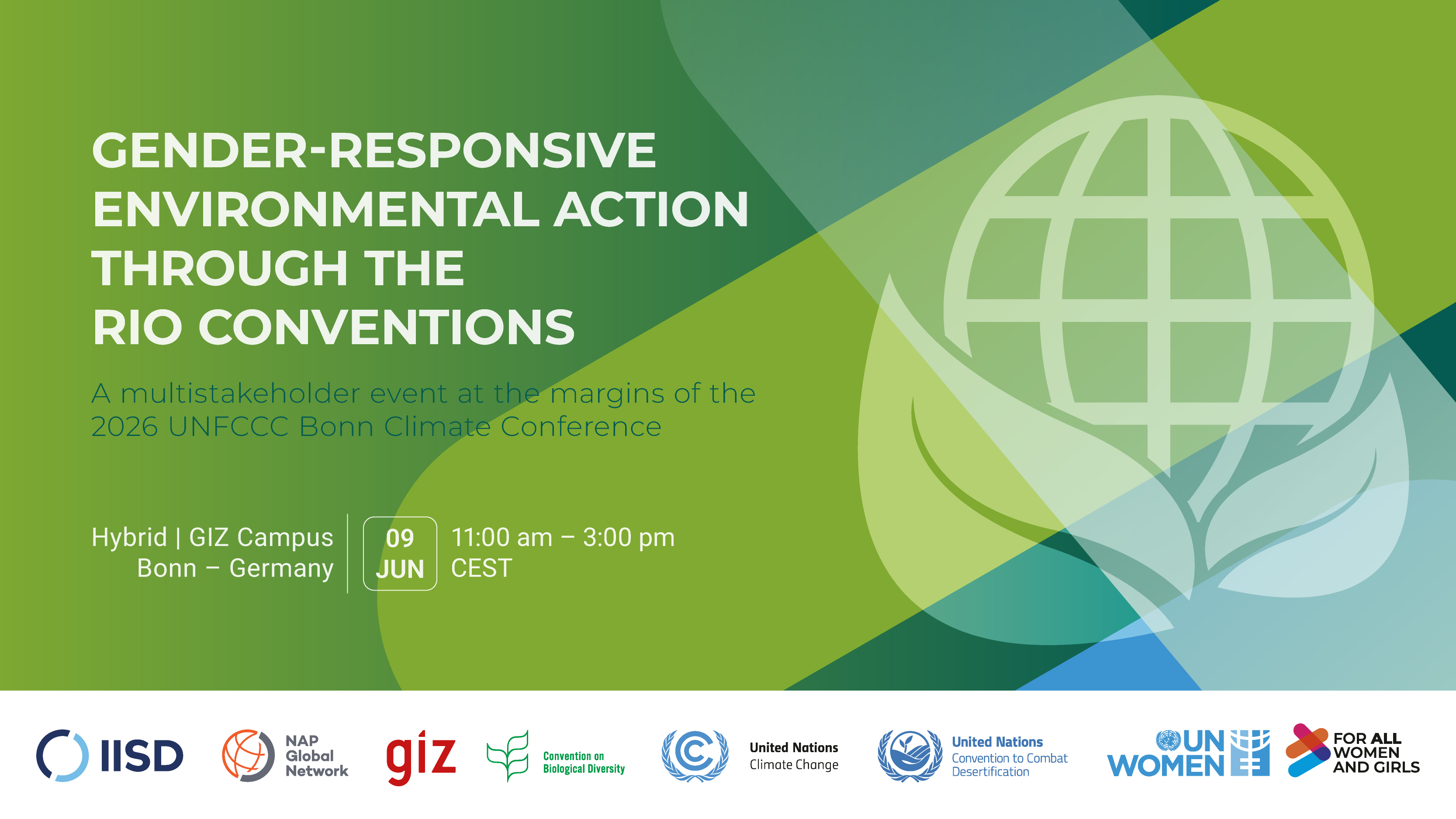
Women don't live in silos. The Rio Convention's Gender Actions Plans should match this reality.
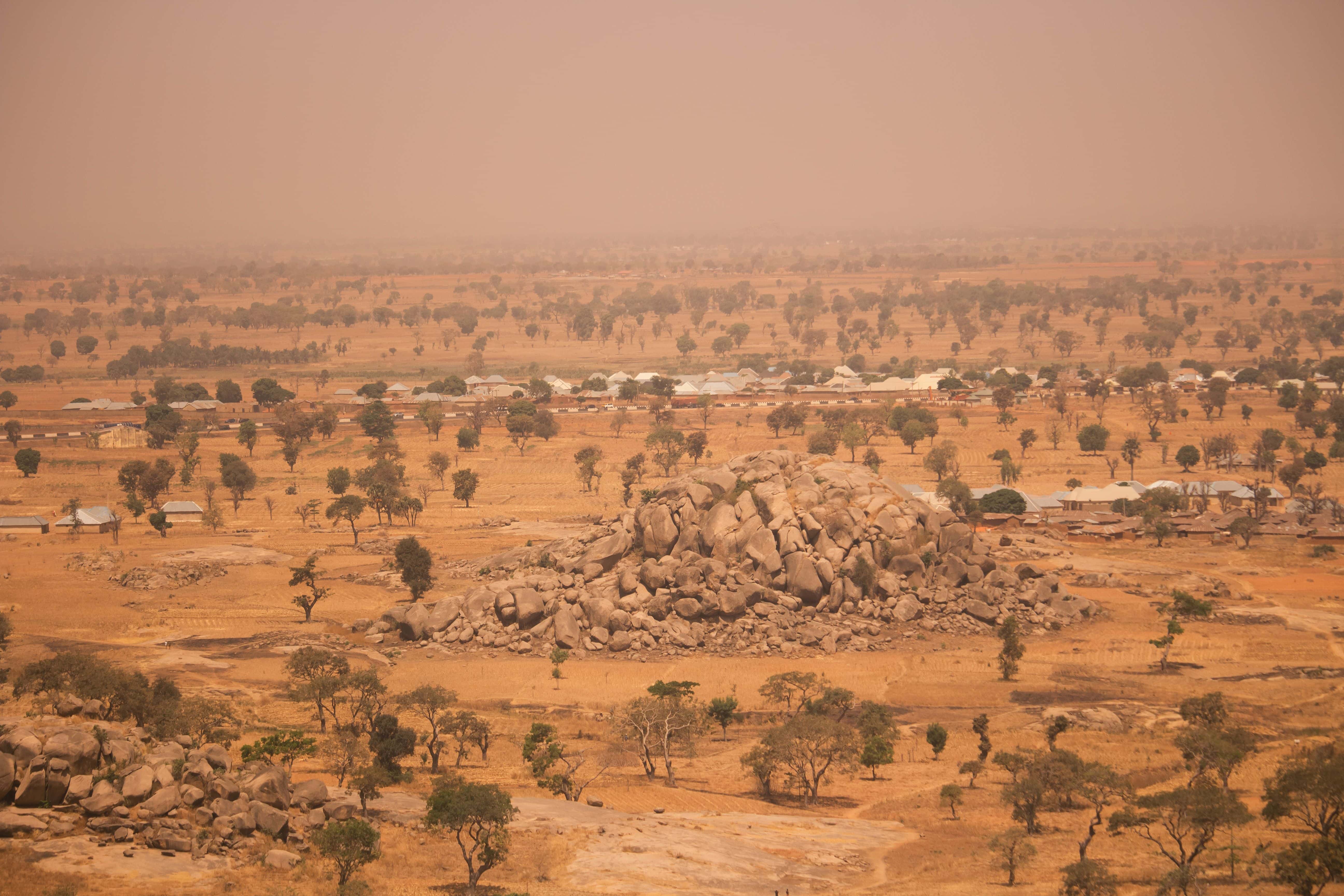
Beyond Decisions, Laws, and Regulations: Why Are Pastoral Areas Still Shrinking and Farmer-Herder Conflicts Rising?
This World Day to Combat Desertification and Drought, we ask why pastoral land in Niger continues to shrink despite decades of legal protection, and what it will take for the commitments made under the UNCCD to actually hold.
Beyond the Negotiation Room: What Actually Shapes Negotiation Outcomes
Negotiation outcomes are shaped far beyond the room, by politics, narratives, institutions, and how evidence is used. Influence depends on connecting these layers and linking global agreements to local realities to turn commitments into real-world impact.

Land tenure, women’s land rights, and resilience: Reflections from CRIC23 toward UNCCD COP17
Our experts discuss what the exchanges at CRIC23 highlighted and revealed about the role of secure and gender-equitable land tenure in the UNCCD's work ahead of the 2026 triple COP year.

Climate diplomacy must shift focus from markets to land rights
Land tenure is key to climate goals, but carbon markets have had harrowing impacts on local communities. A new agenda on adaptation must succeed where decarbonisation has failed, say Frederike Klümper and Joanna Trimble.
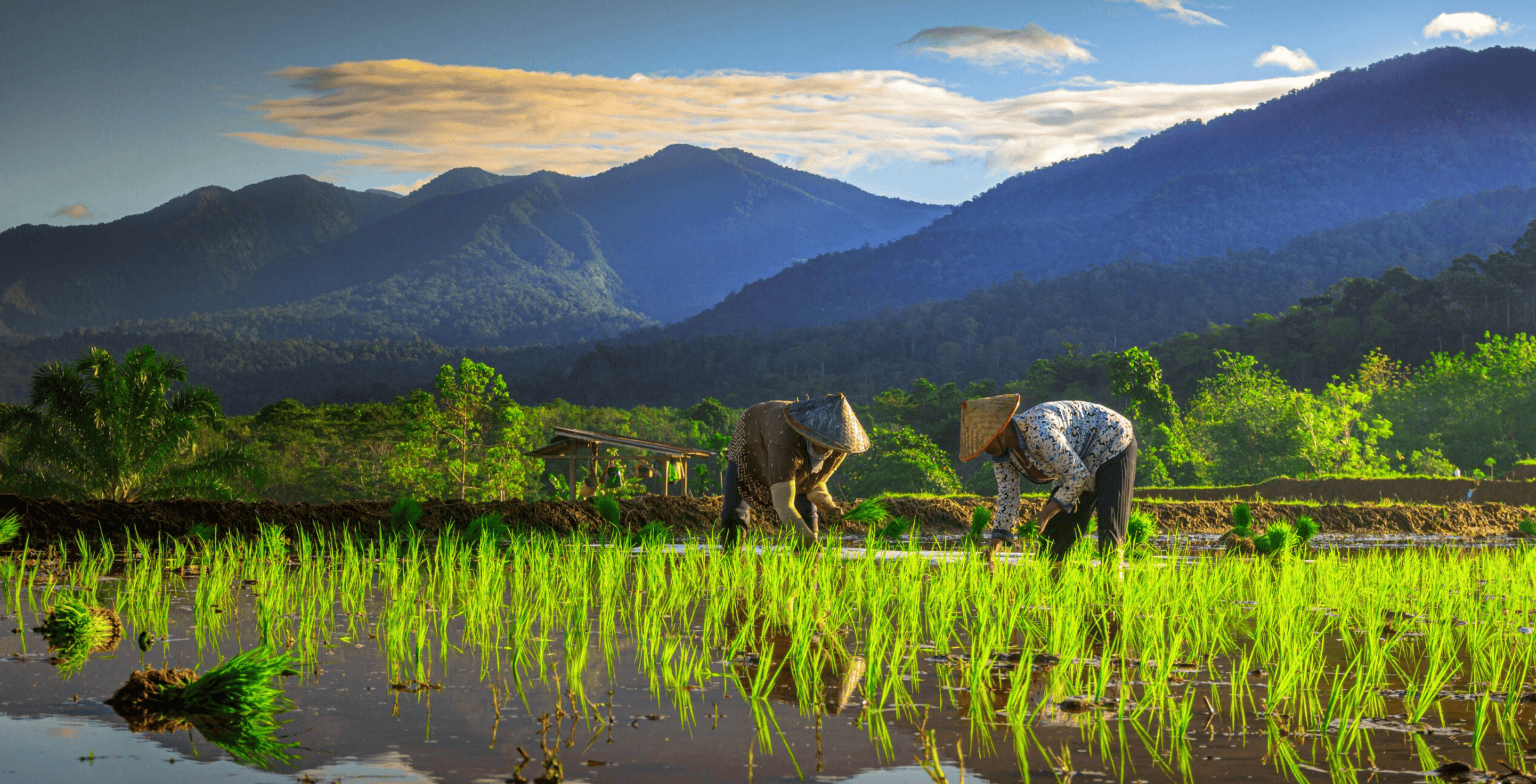
Net Zero Needs Land Justice
As the world prepares for COP30 in Belém, one crucial dimension of climate action remains underexplored: the link between net-zero strategies and land rights.
Fact Sheet
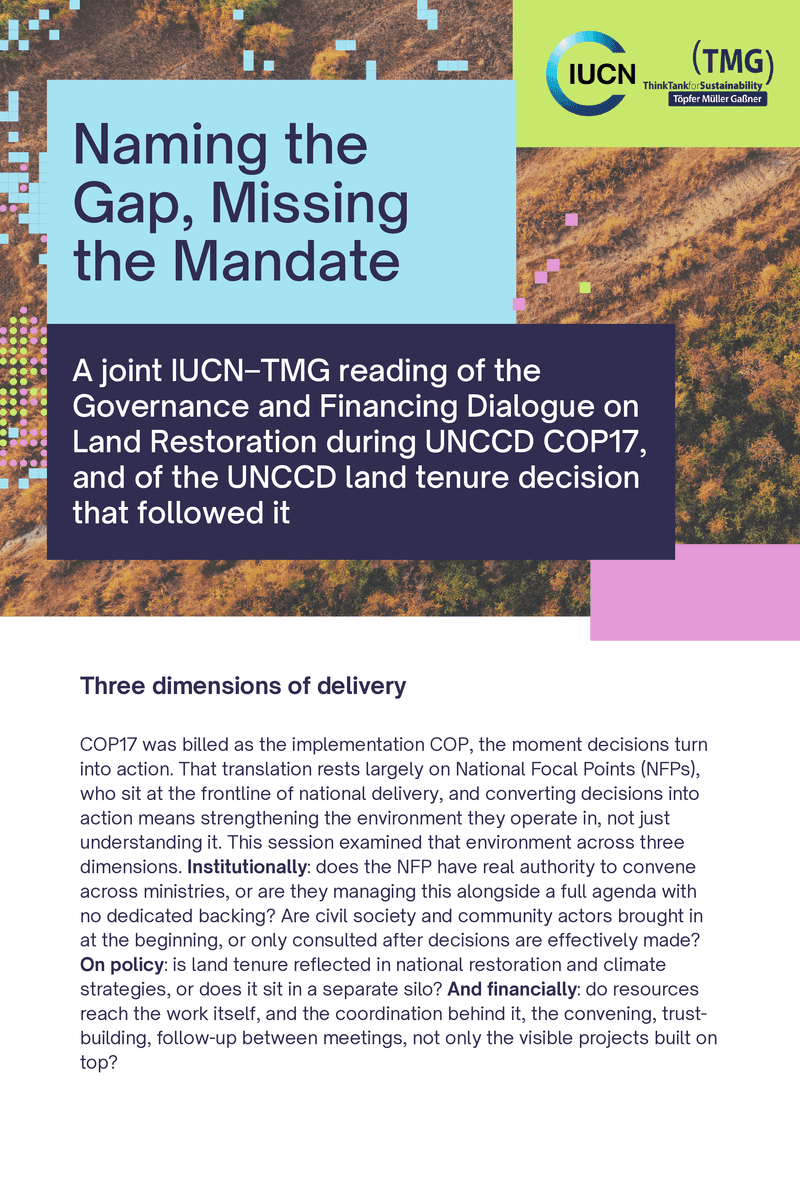
Naming the Gap, Missing the Mandate
A joint IUCN–TMG reading of the Governance and Financing Dialogue on Land Restoration during UNCCD COP17, and of the UNCCD land tenure decision that followed it.
Written by Frederike Klümper, Victorine Che Thöner, Kader Baba
Published on Sep 17, 2026
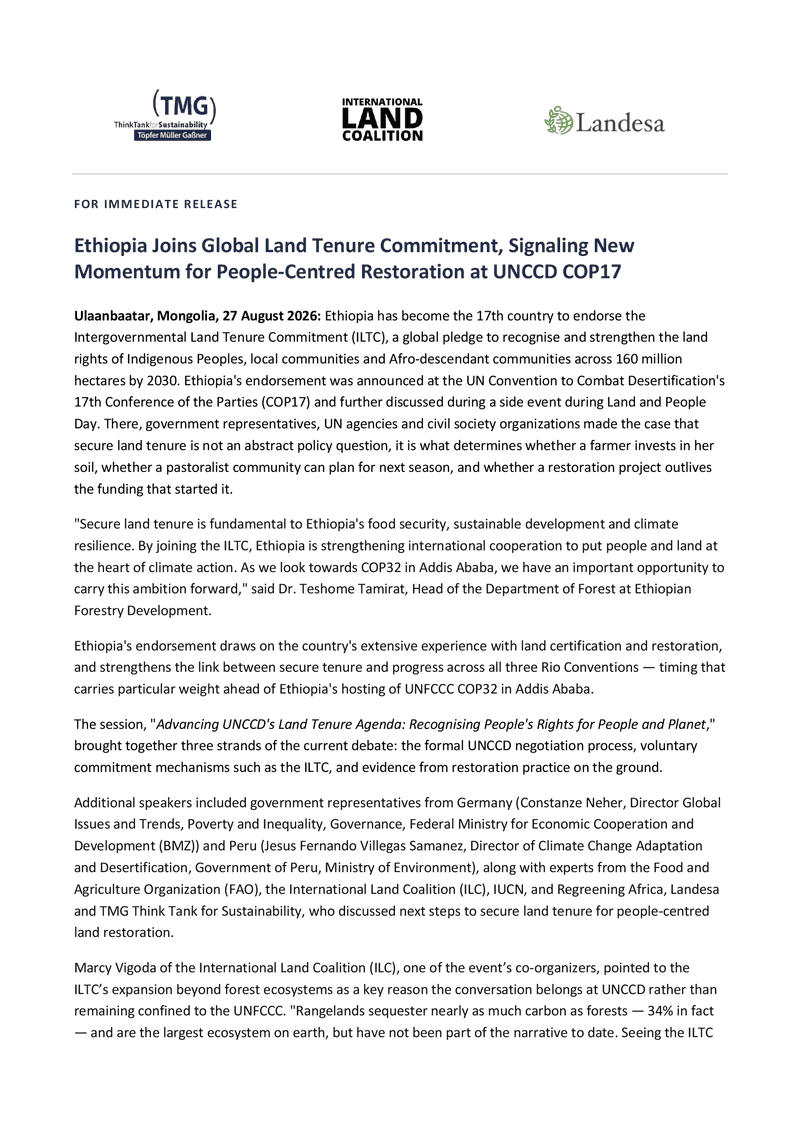
Press Release
Ethiopia Joins Global Land Tenure Commitment, Signaling New Momentum for People-Centred Restoration at UNCCD COP17
Ethiopia has become the 17th country to endorse the Intergovernmental Land Tenure Commitment (ILTC), a global pledge to secure the land rights of Indigenous Peoples, local communities and Afro-descendant communities across 160 million hectares by 2030. The endorsement was announced at UNCCD COP17 in Ulaanbaatar, at a side event co-organized by TMG, the International Land Coalition and Landesa, bringing together government representatives, UN agencies and civil society to discuss next steps for people-centred land restoration.
Written by Frederike Klümper, TMG Think Tank for Sustainability Ashley von Anrep, International Land Coalition Beth Roberts, Landesa
Published on Aug 28, 2026
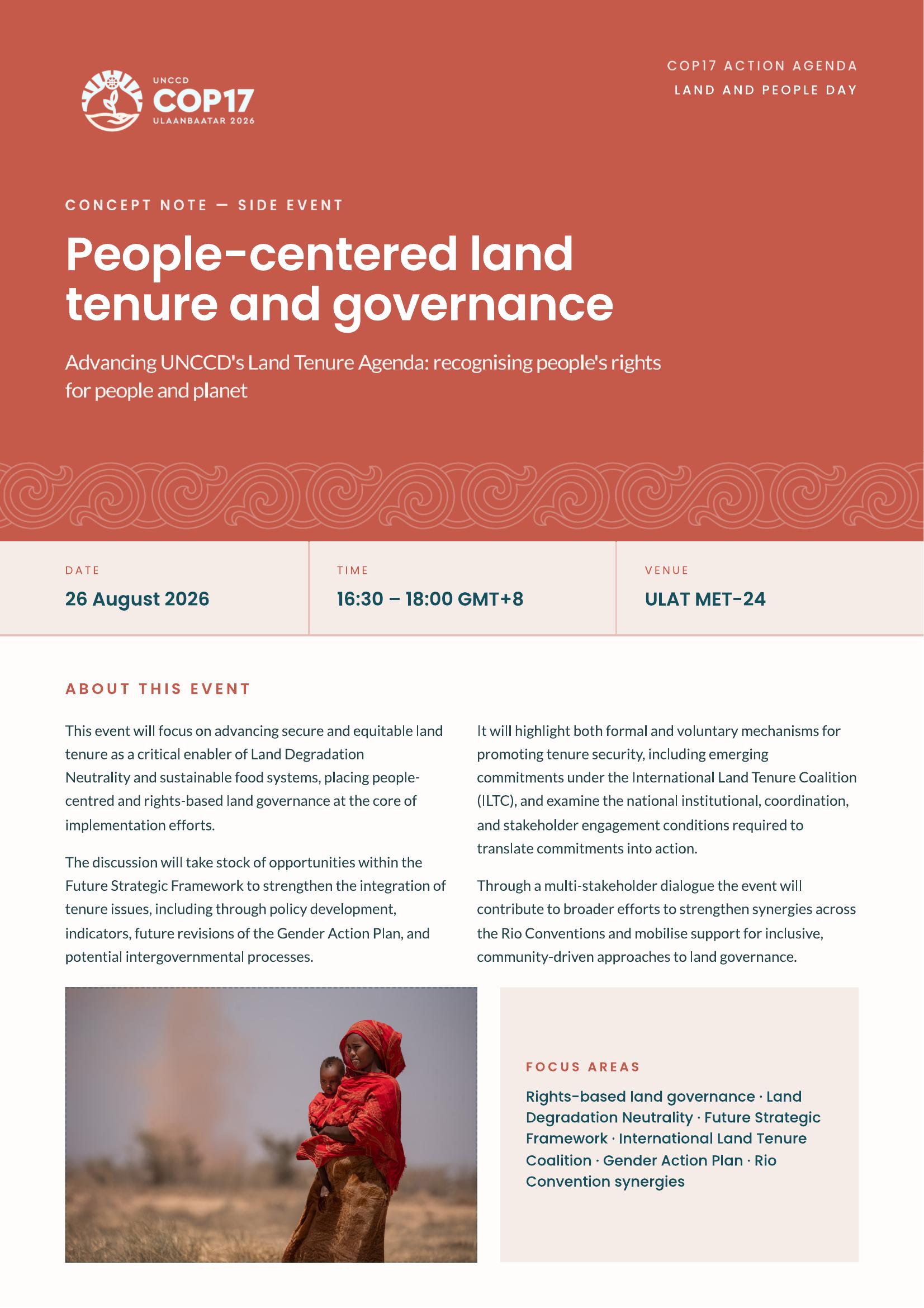
Concept Note and Agenda
Action Agenda – Land and People Day
COP17 Action Agenda Concept Note: This event will focus on advancing secure and equitable land tenure as a critical enabler of Land Degradation Neutrality and sustainable food systems, placing people-centred and rights-based land governance at the core of implementation efforts.
Written by Land Governance
Published on Aug 25, 2026
Booklet
Just Transition: Enabling environments for just implementation of land tenure commitments – A Guidance Booklet
Global land tenure commitments only deliver when national governance systems can translate them into coordinated, inclusive, and resourced action. This booklet combines enabling environment analysis with just transition principles to explain why implementation gaps persist, and offers a diagnostic tool across four governance dimensions to help UNCCD National Focal Points, policymakers, and civil society identify bottlenecks and entry points for reform.
Written by Daniel Montas, Frederike Klümper
Published on Jul 16, 2026
Policy Brief
From Ambition to Impact: Why LDN TSP 2.0 and LDN-TPPs Must Integrate a Just Transition
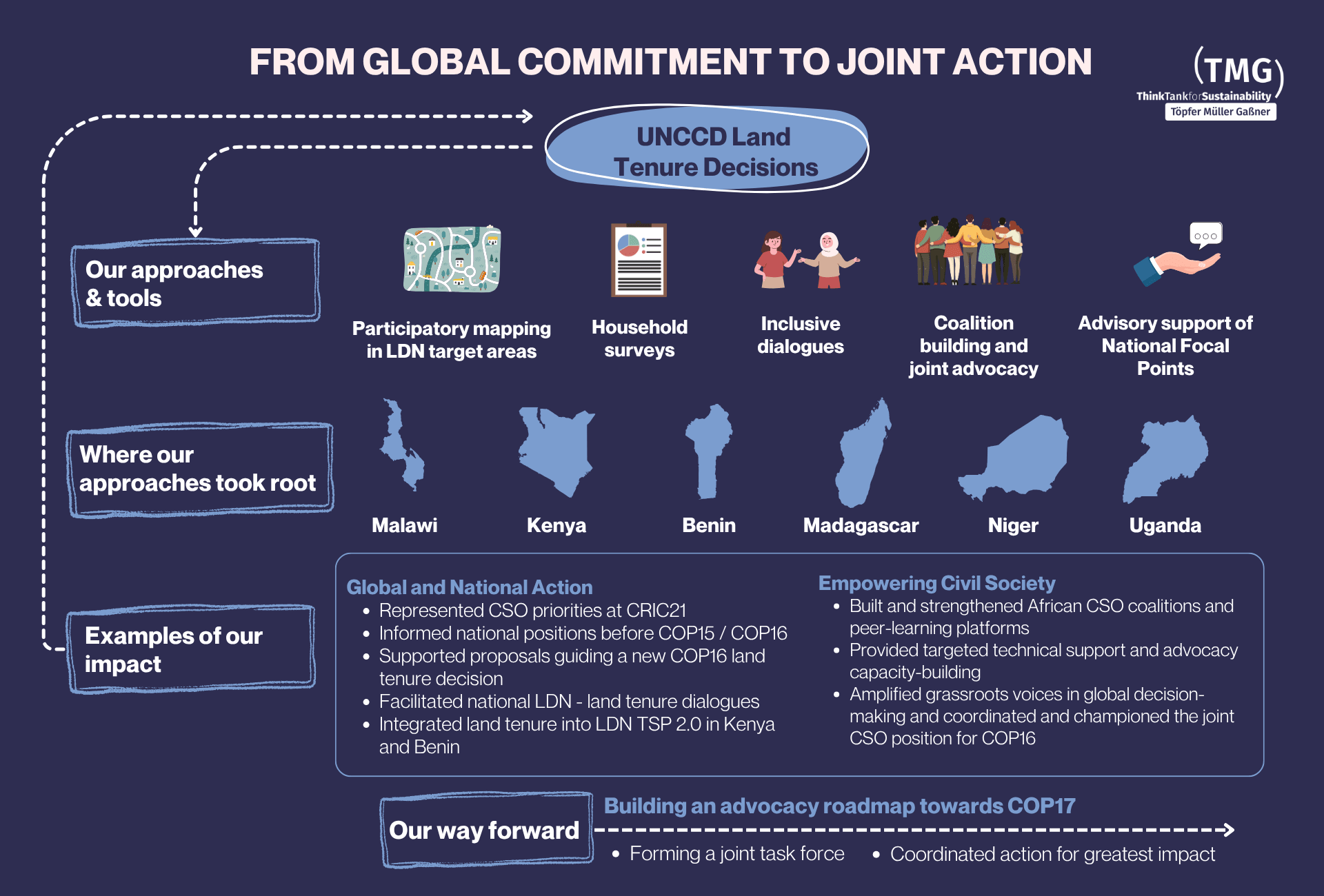
LDN implementation is constrained less by technical limitations than by governance failures, a finding borne out by TMG's work in Benin, Kenya, Madagascar, Malawi, Niger, and Uganda. As countries roll out LDN TSP 2.0 and design Transformative Projects and Programmes, this brief draws attention to these gaps and the risk of scaling them further, setting out five policy recommendations for embedding a just transition lens.
Written by Check Abdel Kader Baba, Frederike Klümper
Published on Jul 15, 2026
Policy Brief
Land, Governance, and Resilience: Strengthening Implementation Conditions
This brief argues that weak implementation of UNCCD land tenure decisions stems not from a lack of collaboration, but from the absence of the institutional, financial, and coordination conditions that enable National Focal Points (NFPs) to implement them. Drawing on experiences from Benin, Kenya, and Madagascar, it highlights how NFPs and CSOs could collaborate more effectively and translate UNCCD land tenure decisions into concrete actions. The brief offers concrete recommendations to Parties and decision-makers present at COP 17 to move from commitments to implementation.
Written by Frederike Klümper, Check Abdel Kader Baba, Washe Kazungu
Published on Jul 14, 2026
- Land Governance Feb 26, 2026
Land Leasing Guidelines: Peace of Mind with a Secure Piece of Land
This mini documentary explores how community-led approaches are creating systemic change and transforming women's relationship with land in rural Kenya.
- Land Governance Sep 20, 2025
Land leasing guidelines transform land access for women
Women-led grassroots organization, Shibuye Community Health Workers, co-developed land leasing guidelines in their communities. Explore the transformational results.
- Land Governance Dec 02, 2024
The Women's Land Rights Initiative: placing land rights at the heart of just climate action
Our latest video showcases why women’s land rights must rest at the heart of just climate action.
- Land Governance Nov 12, 2024
Soil Atlas 2024: Facts and figures about a vital resource
Healthy soils are vital for food security, biodiversity and climate resilience, yet 1/3 of soils are degraded worldwide. As land use competition and rights violations rise, soil must be central to just climate policies.
- Land Governance Mar 11, 2024
The Haki Ardhi App
A tool that enables women to report tenure rights violations and gender-based violence.
- Land Governance Feb 06, 2023
Monitoring the Human Right to Land
A tool for monitoring land-based human rights violations
- Land Governance Oct 04, 2022
First Governor's Day with Farmers - Kakamega County, Kenya
A novel approach aiming to bring farmers and agricultural policymakers closer together.
- Land Governance Sep 26, 2022
Tem Sesiabun Gorado - Un modèle innovateur de transfert de connaissances
Un nouveau modèle de transfert de connaissances entre agriculteur·rice·s
- Land Governance Sep 26, 2022
Tem Sesiabun Gorado - An innovative model for knowledge transfer
A novel farmer-to-farmer knowledge transfer model
- Land Governance Jun 02, 2022
No Sustainability Transition Without Securing Legitimate Land Rights - TMG @ COP 15
TMG and partners bring "Rights to Land" agenda to COP 15
- Land Governance Jan 13, 2022
The State of Land Degradation Neutrality in Madagascar
Just Transitions towards Land Degradation Neutrality: Tenure Rights for Soil Restoration
- Land Governance Oct 13, 2021
Hunger, Land and Gender: Making Women’s Land Rights a Reality
Webinar recording of the first event in the series Hungry for Change
- Food Systems Sep 13, 2021
Land-Food-Climate: An African-European Dialogue on Climate Resilience
Teaser video for the "Land-Food-Climate: An African-European Dialogue on Climate Resilience" event series
- Land Governance Feb 22, 2021
Building Back Better and Greener with Agroecology
A video marking the launch of the Transformative Partnership Platform (TPP) on agroecology
- Land Governance Jan 22, 2021
Agroecology for Adaptation - Systemic Challenges/Systemic Responses
A video sharing perspectives from diverse experts on how to create an enabling environment to support smallholder-led innovations for climate change adaptation