New Report Unveils Key Drivers and Agents for Global Agri-food Systems Transformation
The report advocates for a multi-level governance approach and introduces a concise decision support tool for developing transformation pathways
Multiple interlinked crises - collectively known as the 4Cs (Climate, (Post-)Covid, Conflict, and Costs) continue to impede advancements in globally agreed upon sustainable development goals and threaten the well-being of humans and nature. Despite widespread discourse and consensus that a transformation of our agri-food systems is necessary to meet these challenges adequately, the precise conceptualization of the term frequently lacks clarity.
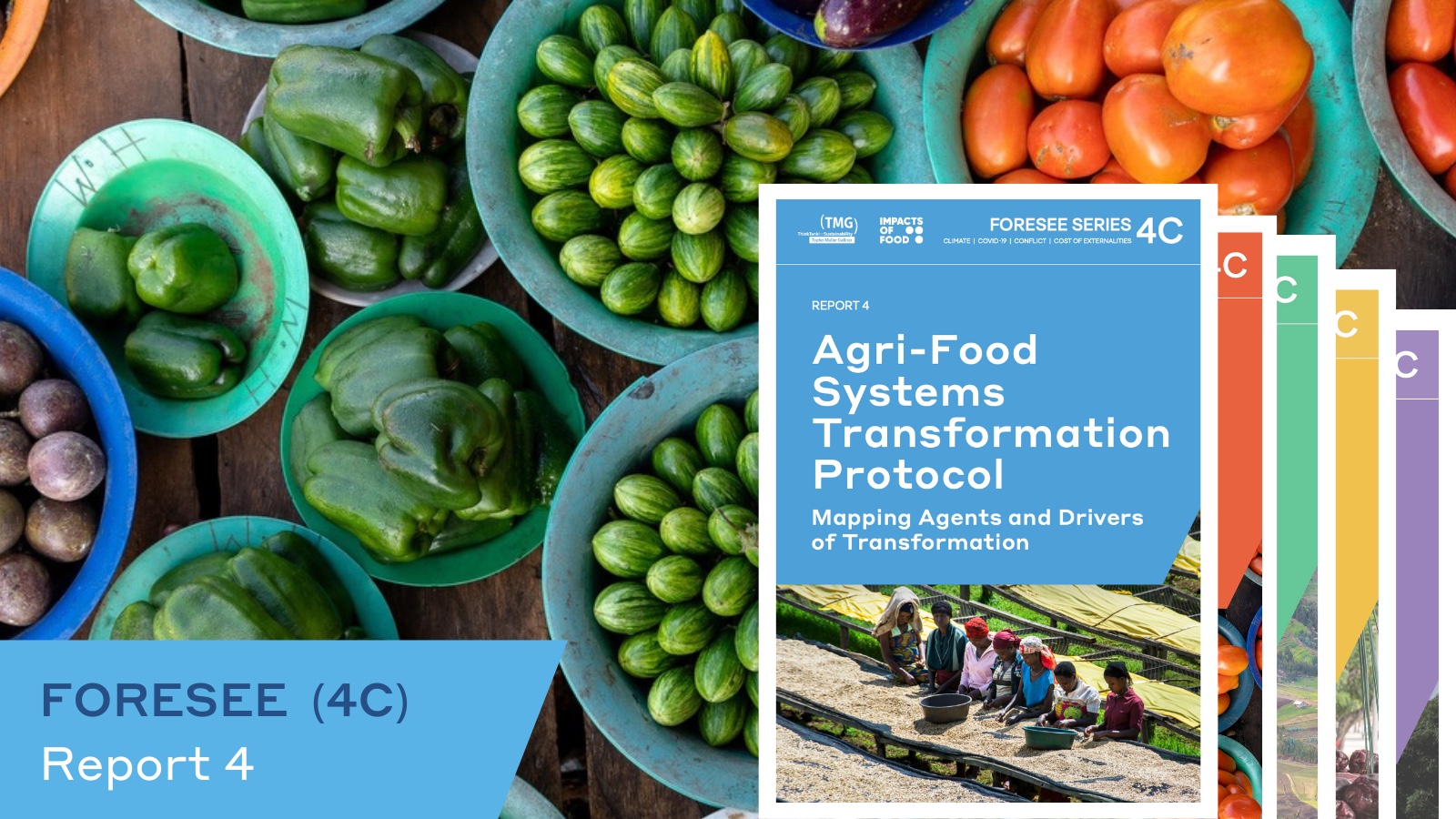
The Climate Impacts of Food (CLIF) project, co-implemented by TMG, WWF Germany and corsus corporate sustainability, aims to develop a systematic understanding of the transformation of food systems. This includes the state of the debate, key actors and drivers, and strategies for concrete political and structural pathways to transformation. After a first set of three reports under the overarching title FORESEE (4C): The Transformation of Agri-Food Systems in Times of Multiple Crises, a fourth report is being launched: The Agri-Food Systems Transformation Protocol - Mapping the Agents and Drivers of Transformation.
The report acknowledges the consensus on the imperative transformation of agri-food systems to address global challenges but notes the lack of agreement on driving factors and the necessary agents supporting their implementation globally. The report advocates for a multi-level governance framework, incorporating global agreements (primarily the three Rio Conventions - CBD, UNCCD, UNFCCC), national pathways, and implementation. It introduces the Agri-food Systems Transformation Protocol as a decision-support tool at the strategic and operational level to guide diverse actors in the development of systemic solutions for sustainable agri-food systems.
To ascertain the agents ("who") and drivers ("what") pivotal for the successful transformation of agri-food systems, examples of food systems transformation were analysed spanning five continents. The findings reveal that optimal agri-food systems transformation is realized through governmental support, community leadership, and adherence to agroecological principles. Furthermore, a successful transformation pathway is distinguished by the presence of an enabling environment, typified by strong political commitment and active participation.
The full series, including the latest report, can be downloaded <u>here</u>.
Report
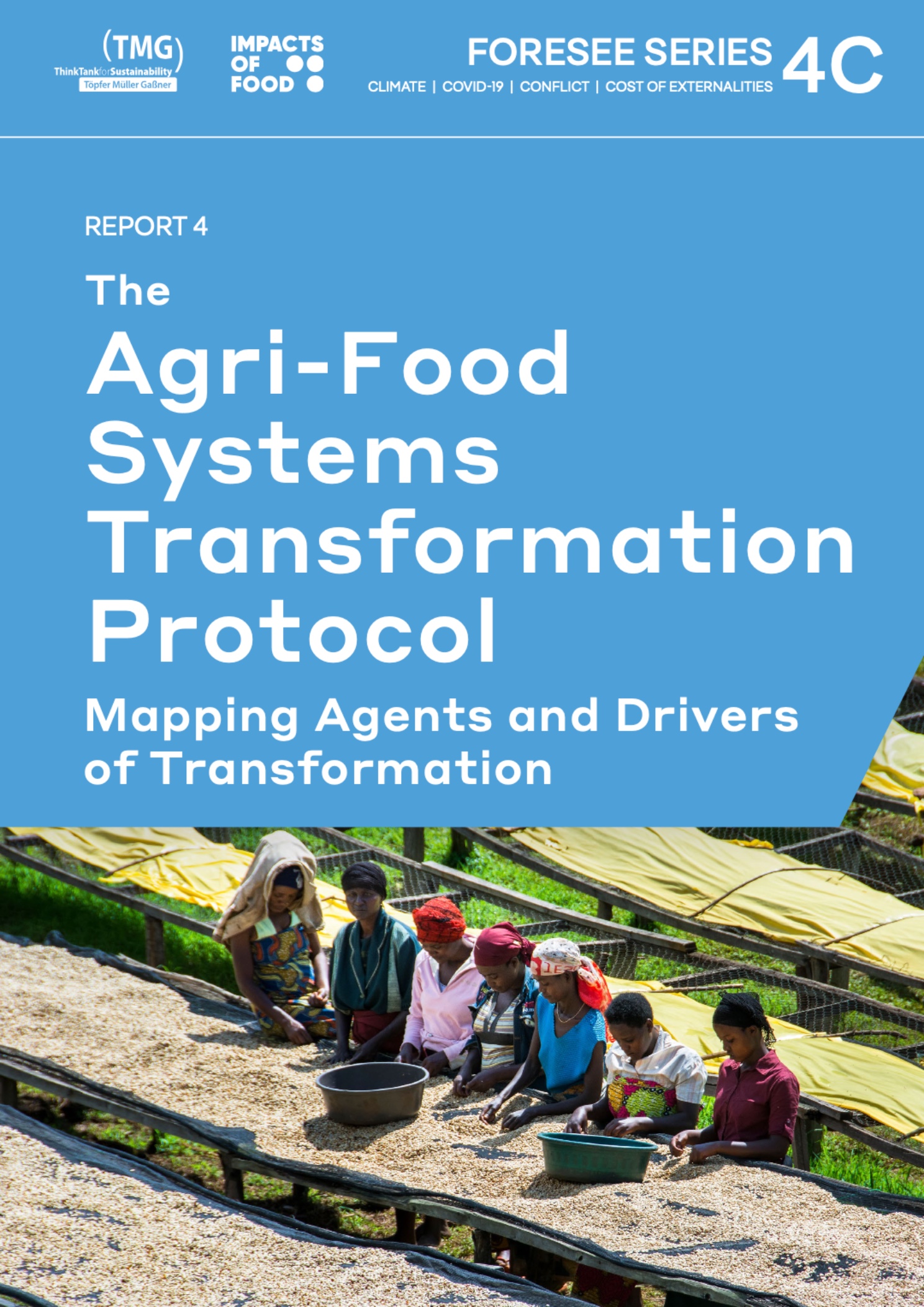
FORESEE (4C) Report 4: The Agri-Food Systems Transformation Protocol - Mapping Agents and Drivers of Transformation
Exploring key actors and catalysts for agri-food systems transformation.
Written by Tavseef Mairaj Shah, Olivia Riemer, Nadia El-Hage Scialabba, Alexander Müller
Published on Dec 04, 2023
Report
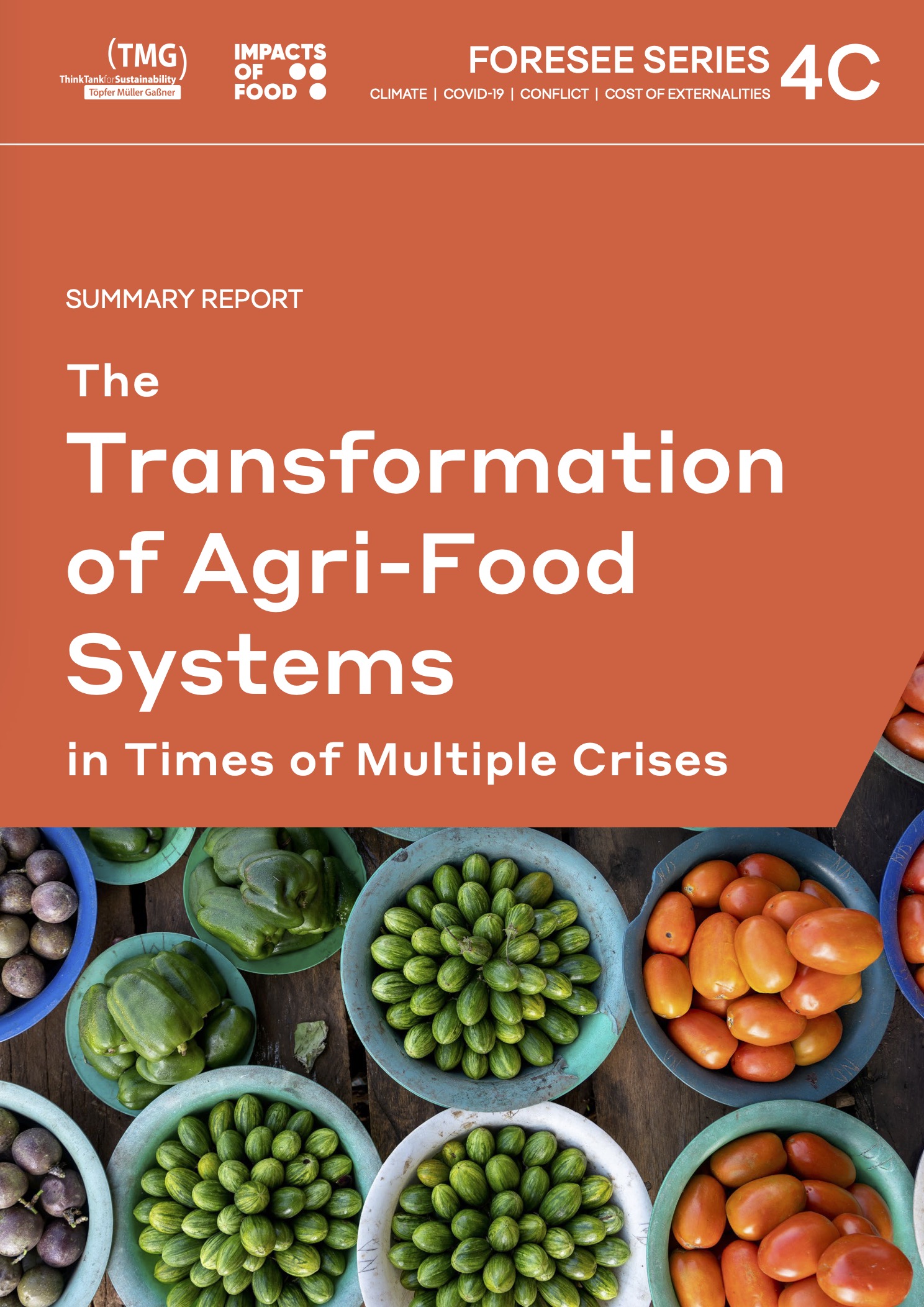
FORESEE (4C) Summary Report: The Transformation of Agri-Food Systems in Times of Multiple Crises
Exploring equitable, healthy, resilient and sustainable pathways for agri-food transformation. This is a summary of the FORESEE (4C) series: Reports 1, 2, and 3.
Written by Tavseef Mairaj Shah, Olivia Riemer
Published on Apr 03, 2023
Report
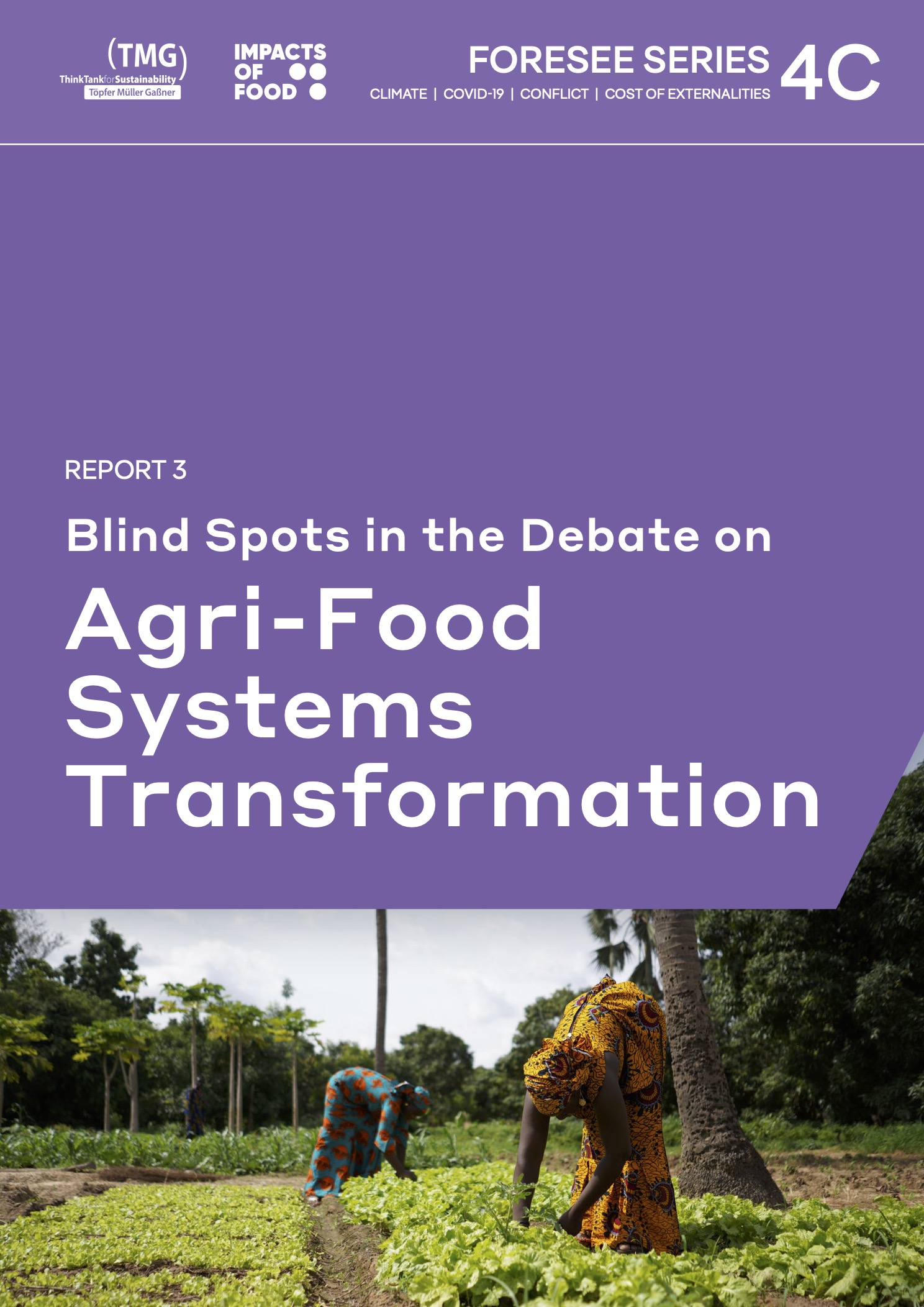
FORESEE (4C) Report 3: Blindspots in the Debate on Agri-Food System Transformation
Analysing blind spots in the debate around agri-food systems transformation and how to address them.
Written by Patrick Caron, Maureen Gitagia, Michael Hamm, Ulrich Hoffman, Elizabeth Kimani-Murage, Tania Martinez-Cruz, Kathleen Merrigan, Pat Mooney, Olivia Riemer, Nadia El Hage Scialabba, Tavseef Mairaj Shah
Published on Apr 03, 2023
Report
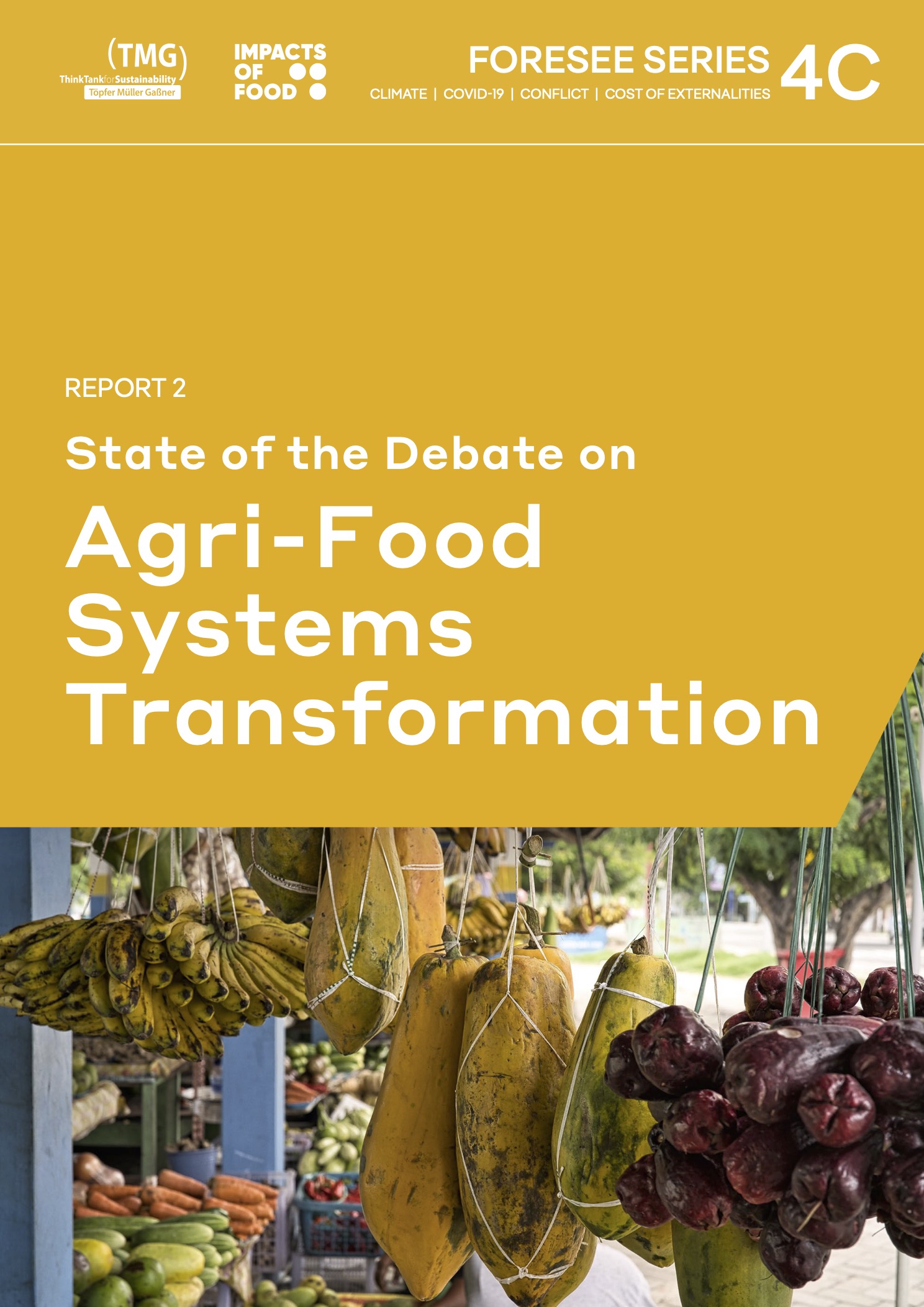
FORESEE (4C) Report 2: State of the Debate on Agri-Food Systems Transformation
A multi-actor review of current debates around agri-food systems transformation.
Written by Nadia El-Hage Scialabba, Sarah Zitterbarth, Tavseef Shah
Published on Apr 03, 2023
Report
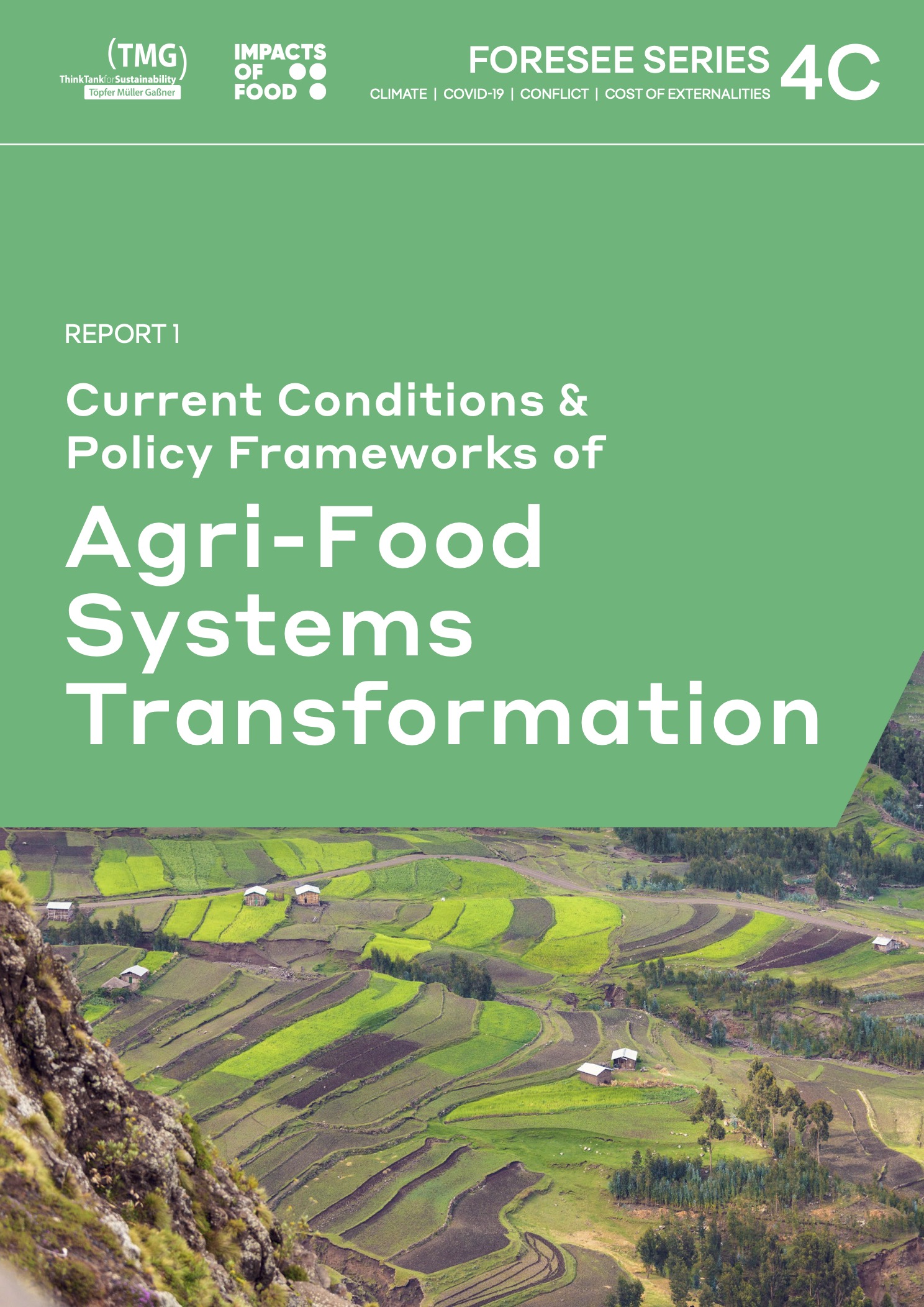
FORESEE (4C) Report 1: Current Conditions and Policy Frameworks of Agri-Food Systems Transformation
Analysing the 4Cs and their interaction with agri-food systems
Written by Olivia Riemer, Tavseef Mairaj Shah, Sarah Zitterbarth
Published on Apr 03, 2023