Discussion
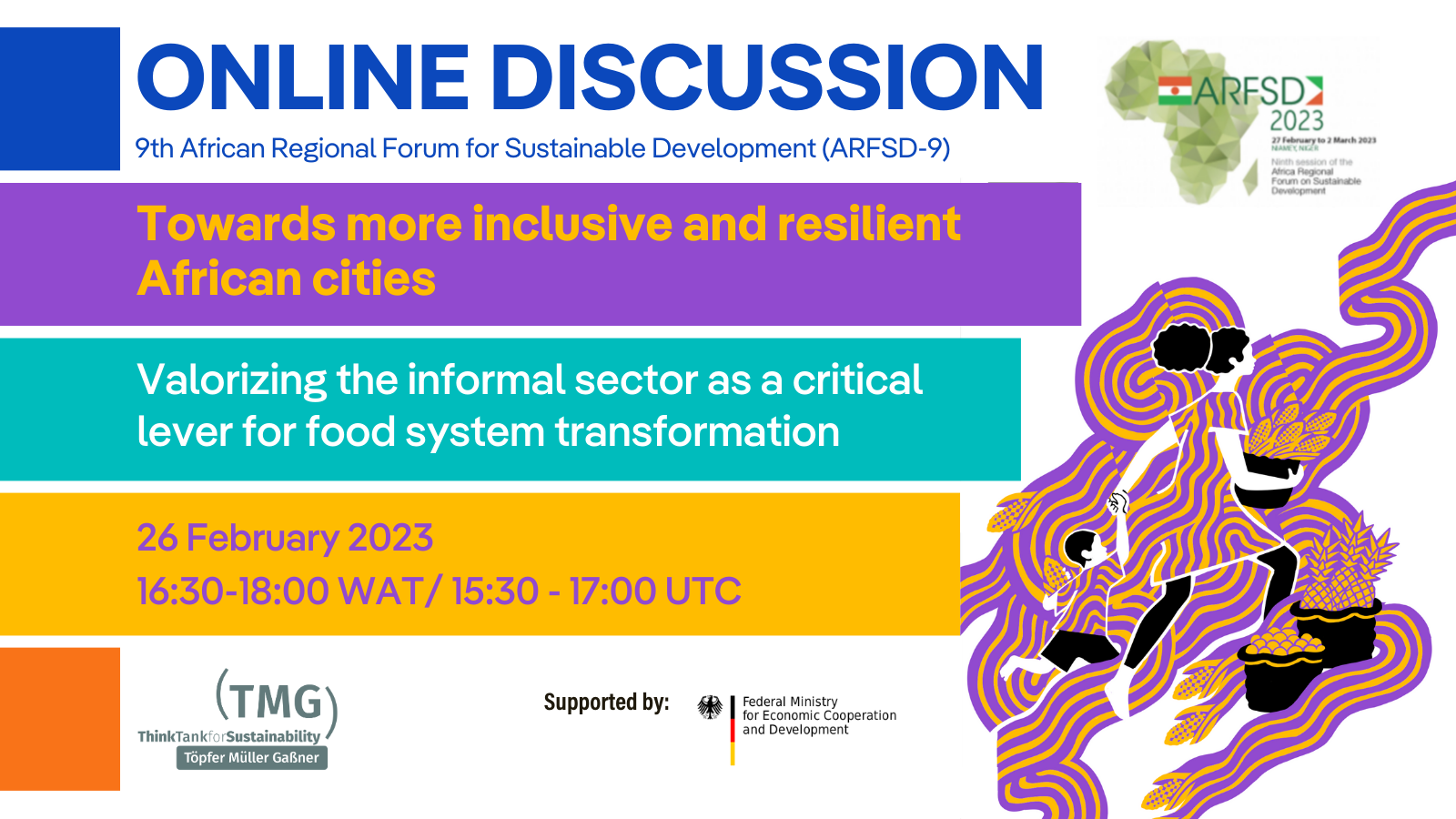
Towards more inclusive and resilient African cities: Valorizing the informal sector as a critical lever for food system transformation
Online discussion at the 9th African Regional Forum for Sustainable Development (ARFSD-9)
Recognizing that the informal sector is a crucial part of the solution, but is largely absent from planning and governance processes, TMG's Urban Food Futures programme works with diverse actors in three African cities (Nairobi, Cape Town and Ouagadougou) to co-design and implement contextualized solutions to food security and other pressing challenges in informal and low-income urban settings.
Our recently concluded one-year scoping phase sought to understand how the Covid-19, food price, climate and other crises are impacting low-income urban communities and how coping strategies are emerging and taking further shape. Building on insights from the transdisciplinary study, TMG and partners from the three cities will convene a virtual side event at this year's African Regional Forum for Sustainable Development (ARFSD-9). With speakers drawn from urban research, municipal administrators, informal sector support organizations and advocacy networks, the session aims to provide policy-relevant insights on:
- How to design food-sensitive urban planning approaches that “valorize” solutions from small-scale traders, urban food producers and other informal actors;
- How to build genuinely representative urban governance processes by linking urban planners, policy makers, activists and researchers with informal sector actors;
- How to strengthen accountability of power holders to low-income communities and hence boost their visibility and relevance in urban governance processes.
The side event will contribute to discussions at ARFSD-9, which explores the theme: Accelerating the inclusive and green recovery from multiple crises and the integrated and full implementation of the 2030 Agenda for Sustainable Development and Agenda 2063. As Africa's preparatory event for the UN High Level Political Forum (HLPF) the Forum will address the five Sustainable Development Goals (SDGs) under review this year, among them SDG 11 (sustainable cities and communities), which is the focus of this side event.
The Urban Food Futures Scoping Phase took place in three African cities - Ouagadougou, Nairobi, and Cape Town - between 2021 and 2022 with the aim of co-creating innovative pathways to transform urban food systems.
The scoping phase brought together local communities in informal and low-income neigbhourhoods, researchers, grassroots organizations, and academia to address food system challenges affecting the marginalized communities living in these areas. A key objective of this collaborative process was to explore how stakeholders can work together to harness the strengths of groups that are often invisible in urban planning and governance processes. It posed questions about hunger, food justice, and urban food system transformation with a view to revalorizing informality.
Through its partnership with established advocacy organizations whose work focuses on high-density informal settlements and low income areas, the Urban Food Futures programme further sought to challenge conventional research approaches by involving local communities in all research steps. These include:
- Identifying a problem
- Unpacking the root causes of systemic challenges
- Learning from each other
- Co-developing solutions
This webinar will bring together some of the key contributors of the scoping phase to reflect upon some of the significant insights generated throughout this study, including assessing how the collaborative approach amplified the voice of “the researched” by providing spaces to practice their agency and ownership throughout the research process.
Some key insights and findings from the scoping phase that will be expanded upon include:
- How global crises are compounded by local and often individual crises such as income inequality, no access to key public services, and gender-based violence, evictions or domestic migration that place a further stress on a fragile urban food system.
- Why policy makers and other external actors need to rethink urban food and nutrition security from the perspective of those who experience these realities.
- What it takes to facilitate successful social innovations that prioritises and valorize local voices in policy, planning and implementation.
- The role of "Urban Nutrition Hubs" as living labs for addressing immediate food and nutrition needs while also offering communal spaces for co-designing and piloting social innovations to address food system challenges and collectively learn from those processes.
The Face of Hunger
The Face of Hunger was produced by TMG’s partner organization Food Agency Cape Town and featured during a panel discussion.
Feb 16, 2023
Date
Time
16:30 – 18:00 GMT+1 (Berlin)
Your time: 15:30 – 17:00 UTC
Organisers
TMG Research gGmbH
City of Cape Town
Foyet FAMA/Cuisines sans Frontières
Food Agency Cape Town
Muungano wa Wanavijiji - SlumDwellers International
African Centre for Cities
Languages
en
fr

Nomonde Buthelezi
Food Agency Cape Town (FACT)

Tamsin Faragher
City of Cape Town, South Africa

Joseph Muturi
Slum Dwellers International (Muungano wa Wanavijiji), Nairobi, Kenya

Jane Weru
Akiba Mashinani Trust, Nairobi, Kenya

Apsa Diallo
Foyer FAMA, Ouagadougou, Burkina Faso

Gareth Haysom
African Centre for Cities, Cape, Town, South Africa

Nicole Paganini
TMG Research


Report
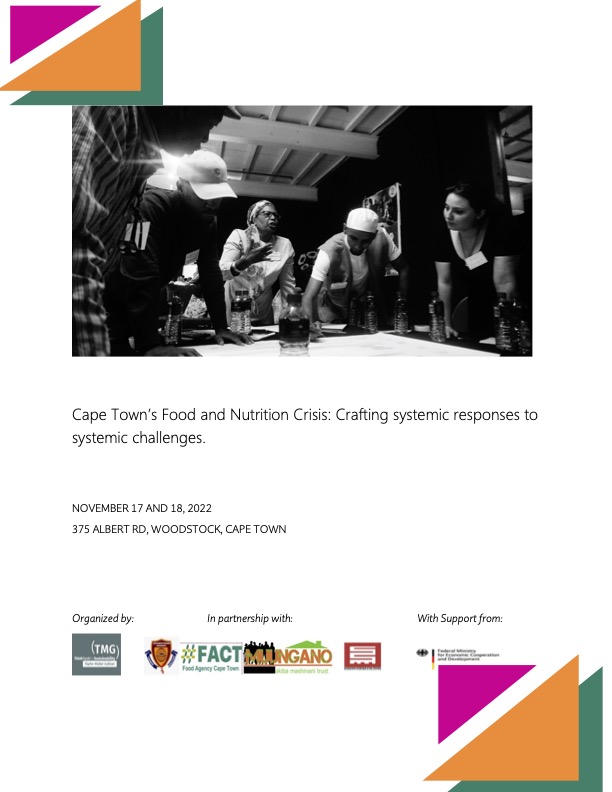
Cape Town’s Food and Nutrition Crisis: Crafting systemic responses to systemic challenges
Highlights of policy event held from 18-19 November 2022 in Cape Town.
Written by Luke Metelerkamp, Lena Bassermann, Nicole Paganini
Published on Feb 10, 2023
Article
Trading to Eat: How The Informal Economy is Hunger-Proofing Africa’s Cities
An analysis of the critical role that informal food traders play in bridging the food and nutrition gap in Africa’s low-income urban populations.
Written by Luke Metelerkamp
Published on Feb 01, 2023
Report
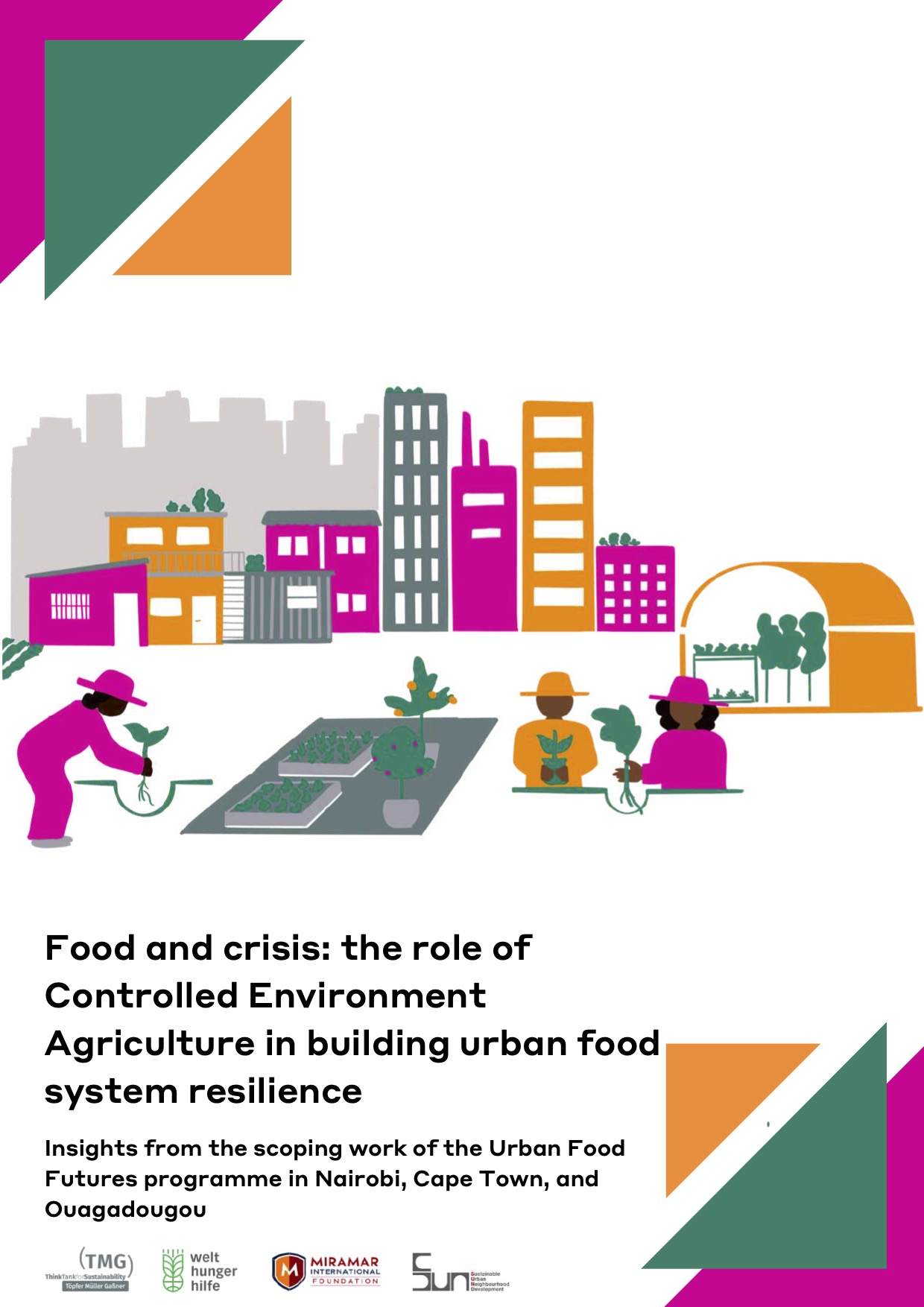
Food and crisis: the role of Controlled Environment Agriculture in building urban food system resilience
Insights from the scoping work of the Urban Food Futures programme in Nairobi, Cape Town, and Ouagadougou
Written by Multiple authors (see publication)
Published on Dec 22, 2022
Working Paper
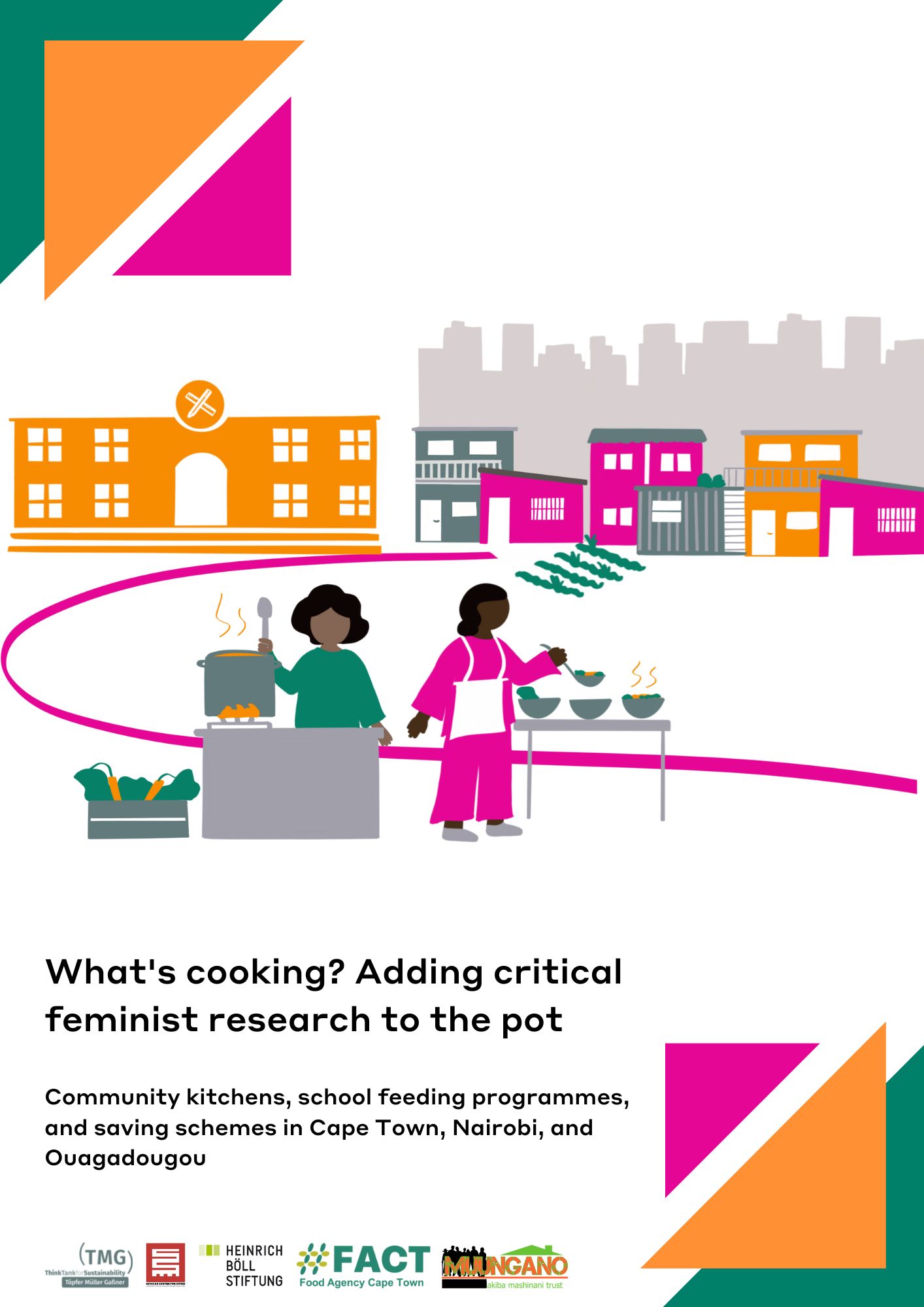
What's cooking? Adding critical feminist research to the pot
How community kitchens, school feeding programmes and informal savings schemes support communities in time of crises and food insecurity
Written by J. Battersby, K. Ben-Zeev, N. Buthelezi, I. Fabricci, M. Fakazi, S. Kiragu-Wissler, Y. Magazi, P. Njoroge, H. Nyaba, S. Nyaba, M. Nyambura, A. Owade, N. Paganini, C. Peters, W. Peukers, P. Silwana, E. Sango, J. Weru
Published on Oct 27, 2022